Cashflow sits at the centre of SME lending decisions, but it’s not always clear how lenders assess it in practice.
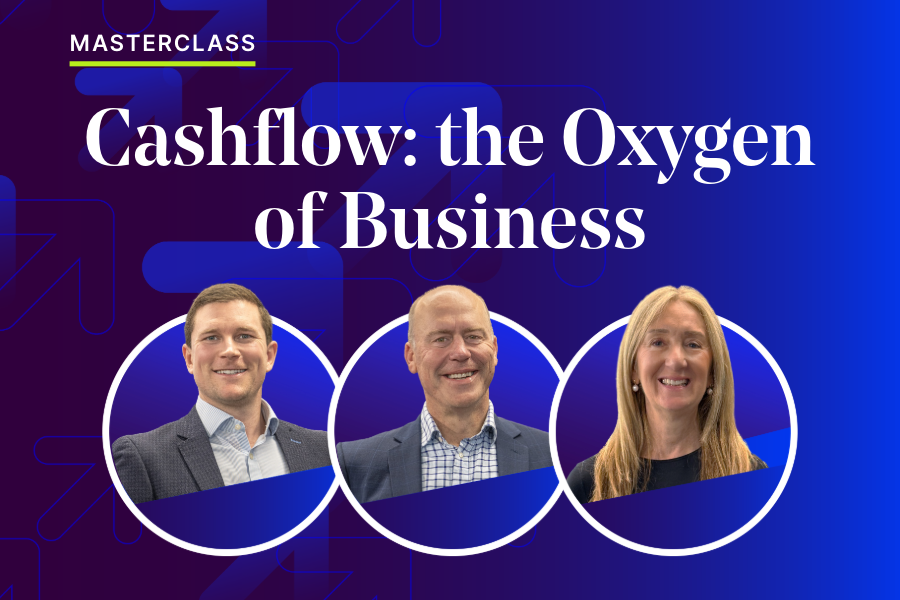
This Q&A captures Banjo’s panel responses to frequently raised questions, offering a lender’s-eye view of how experienced credit and risk teams approach cashflow, risk, and real-world SME lending scenarios.
These answers are intended to support broker conversations and help set clear, confident expectations with clients.
If you’d like deeper context, you can also view the Cashflow: The Oxygen of Business webinar on-demand here.
This Q&A captures Banjo’s panel responses to frequently raised questions, offering a lender’s-eye view of how experienced credit and risk teams approach cashflow, risk, and real-world SME lending scenarios.
These answers are intended to support broker conversations and help set clear, confident expectations with clients.
If you’d like deeper context, you can also view the Cashflow: The Oxygen of Business webinar on-demand here.
Is a business running at an anticipated start‑up loss a problem for lending?
One of Banjo’s qualifying criteria is that the business looking to borrow has been trading for a minimum of two years.
For established businesses that have moved beyond start‑up:
For established businesses that have moved beyond start‑up:
- Historic losses are assessed in context, particularly whether they were planned and/or temporary and understood.
- Historical trading performance does form a large part of our assessment, but we also take the time to understand recent and current cash flows and, in some instances, forecasts. After all, future cashflows pay back the debt/loan.
- Credit teams look for evidence that the business has stabilised and can demonstrate sustainable trading.
Losses become a concern where they are ongoing, unplanned, or indicative of a structural cashflow issue rather than a defined growth or transition phase.
What is considered collateral?
Collateral is assessed based on liquidity, verifiability, and enforceability.
The most common forms of collateral are:
The most common forms of collateral are:
- Business assets (plant & equipment, vehicles, stock and debtors)
- Property (commercial or residential).
How are ATO payment plans treated in assessment?
ATO payment plans are not automatically a negative issue, but they do prompt closer review.
Our credit team will assess:
Our credit team will assess:
- Whether the plan is formal, agreed with the ATO, and the status (i.e. is the plan up to date?)
- That current tax obligations are being met as they fall due
- There is no new or accumulating ATO debt outside the agreed plan
- Consistency and reliability of repayments
- The underlying reason for the arrears (timing vs structural cashflow issues).
A well‑managed ATO payment plan where the business is meeting both plan repayments and current obligations, can demonstrate proactive management and improved discipline. Conversely, missed payments or new outstanding ATO debt will raise concerns around ongoing cashflow pressure.
What is considered overtrading?
Overtrading occurs when a business grows faster than its cashflow can support.
Common indicators include:
Common indicators include:
- Rapid revenue growth with deteriorating cash position
- Increasing receivables (debtor) balances
- Reliance on short‑term funding to support long‑term growth
- Margin compression as volume increases
From a lender’s perspective, overtrading isn’t about growth being “bad”, it’s about growth being under‑funded. Well‑structured facilities can often correct overtrading if identified early. At Banjo, we look for the growth to be funded by an appropriate level of equity and debt.
How do you assess the character of a potential borrower?
Character remains a critical, though often qualitative, part of credit assessment.
Factors typically considered include:
Factors typically considered include:
- Various bureau credit checks
- Track record of meeting obligations (lenders, ATO, suppliers)
- Depth of industry and management experience.
Brokers play an important role here, helping translate the client’s story, context, and decision‑making into a clear narrative for the lender to consider.
Directors’ drawings and Division 7A loans
– how are these viewed?
Directors’ drawings can raise concerns where they:
- Are excessive relative to the business cashflow or company’s profitability
- Create or increase Division 7A loan exposure and are not compliant
- Reduce the company’s ability to service debt or cause the business to need to borrow money to fund the drawings.
Credit teams will look at:
- Whether drawings are consistent and sustainable
- What the drawings have been used for
- How they are treated in financials (salary vs loan)
- Whether Division 7A obligations are recognised, managed and compliant with ATO obligations.
A clear strategy, with advice from accountants and transparent disclosure significantly strengthens the application.
What gross margin (GM%) is generally acceptable for lending?
There is no single acceptable GM%, as it varies widely by industry.
What matters more than the absolute percentage is:
What matters more than the absolute percentage is:
- Consistency of margin over time, and the business owner’s understanding for the GM% at the present time
- Alignment with industry benchmarks
- Whether the margin supports operating costs, debt servicing, and reinvestment.
Lower‑margin businesses can still be strong borrowers if they demonstrate:
- High volume
- Fast cash conversion
- Tight cost control.
Are invoices used as security? Can other forms (e.g. property) also be used?
Banjo does not use invoices as security as such (i.e. not a separately identifiable secured asset in a legal sense. This is more the realm of an invoice financier or debtor financer. Banjo does, however, take the level, spread and quality of debtors into consideration when assessing the assets of a business, and they do form part of our overall security under the General Security Agreement (GSA).
Regardless of lender, security supports the lending decision, it does not replace cashflow. Strong applications clearly demonstrate how the facility will be serviced from trading activity, with security acting as risk mitigation rather than the primary basis for approval.
Understanding cashflow, how it moves, what influences it, and how lenders interpret it, is one of the most powerful tools brokers have to support SME clients. Clear explanations, realistic expectations, and early identification of pressure points lead to stronger outcomes for everyone involved.
Regardless of lender, security supports the lending decision, it does not replace cashflow. Strong applications clearly demonstrate how the facility will be serviced from trading activity, with security acting as risk mitigation rather than the primary basis for approval.
Understanding cashflow, how it moves, what influences it, and how lenders interpret it, is one of the most powerful tools brokers have to support SME clients. Clear explanations, realistic expectations, and early identification of pressure points lead to stronger outcomes for everyone involved.
If you’d like to explore any of these topics in more depth or apply them to a specific client scenario, give us a call on 1300 22 65 65
Download Banjo’s Cash Flow eGuide to understand how cash really moves through your business, identify common cash flow risks, and learn why forecasting is critical to staying financially fit.
Download Banjo’s Cash Flow eGuide to understand how cash really moves through your business, identify common cash flow risks, and learn why forecasting is critical to staying financially fit.